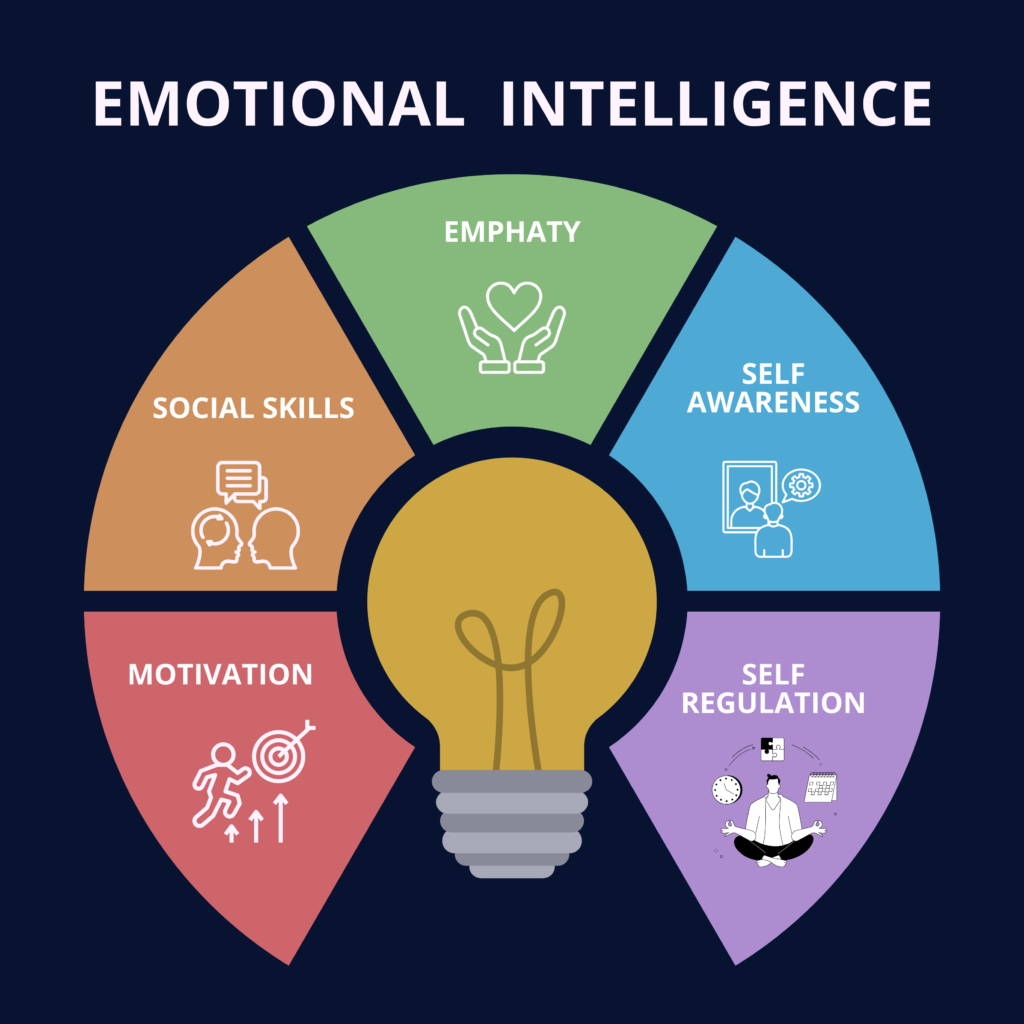
EMOTIONAL INTELLIGENCE
What came to mind the first time you heard about emotional intelligence? Personally, I never understood what that meant until I attended a class on it. One day,I met a colleague crying in the lift, and I cared to enquire what the problem was and if I could be of help. At the first instance, I felt I was being nosy, while judging myself, I asked myself a question: if I were in her shoes and no one paid attention to me, how would I have felt? Immediately, I reached out to the colleague, and I was glad I could have assisted her.
Emotional Intelligence teaches to be aware of one's own emotions and that of those around us. Emotional intelligence builds healthy relationships at work and also among peers. Emotional Intelligence supersedes Intelligence quotient (IQ), yes, ask me how? Emotional Intelligence goes beyond“book knowledge’’,it’s what we call in our local languages “aƒeme nunya, efie nyansa” to wit “home wisdom”. Anyone with high IQ but low emotional intelligence may not be able to go far in life because no one is an island, we relate with the environment in which we find ourselves and with the people around us. If one is not able to control his/her emotions and understand the emotions of others as well as handle interpersonal relationships judiciously and empathetically, this may lead to relationship struggles, frequent conflicts and poor stress management. People with low emotional intelligence often blame others, struggle to show empathy, and face social isolation.
According to Oxford Languages, Emotional Intelligence (EI) is “the capacity to be aware of, control, and express one's emotions, and to handle interpersonal relationships judiciously and empathetically”.Whereas Intelligence Quotient (IQ) is a standardized score derived from specialized tests designed to assess human cognitive abilities, such as reasoning, problem-solving, and memory. It measures intellectual potential compared to the general population rather than specific, learned knowledge. In other words, Intelligence Quotient (IQ) has to do with one’s ability to assess human intelligence across various domains such as geography, physics, biology, mathematics, languages etc. Intelligence Quotient has to do especially with academics or schoolwork. People with high IQ are able to excel in school but people with high EQ succeed in life. One can achieve success at work and lead a more fulfilling life through emotional intelligence. Being able to connect to your emotions, having a moment-to-moment awareness of your emotions and how they influence your thoughts and actions, is the key to understanding yourself and others.
Many people are disconnected from their emotions, especially strong core emotions such as anger, sadness, fear, and joy. This may be the result of negative childhood experiences that taught one to try to shut off feelings. Although we can distort, deny, or numb our feelings, we can’t eliminate them. They’re still there, whether we’re aware of them or not. Unfortunately, without emotional awareness, we are unable to fully understand our own motivations and needs, or to communicate effectively with others.
As a young professional, emotional intelligence is essential in working with colleagues and superiors. Someone who is emotionally intelligent considers the feelings, capabilities of others in decision making. Emotional Intelligence enhances peaceful co-existence in workplace and among colleagues. As a Public Relations Expert, we have the power to drive positive change, champion professional excellence, and contribute to the wellbeing of humanity. Hence, emotional intelligence is a necessary element in execution of tasks. As strategic communicators, emotional intelligence should be the watch word during engagement and exchange of ideas. Every professional in different fields also needs emotional intelligence, not only Public Relations. When emotional intelligence is present in every space, people feel accepted, belonged and they tend to give their best in all capacity.
Emotional Intelligence has several benefits when practiced consciously, namely recognition of one’s own emotional state (self-awareness and self-management) and the emotional state of others (social awareness). From a professional perspective, self-awareness entails being able to control oneself in the heat of a moment at work, during meetings or among colleagues etc. Self-awareness informs the professional of his/ her emotions and how it can affect oneself or the people around hence the need to control it. Being emotionally intelligent doesn’t mean one cannot express how he or she feels but that must be done with absolute decorum. Being aware of one’s emotions is the right step in the right direction, the next step is how to control it or manage it when it surges, that is what we call self-regulation. Emotional Intelligence requires trustworthiness, high integrity and adaptability. These qualities build healthy relationship among colleagues, stakeholders and partners. Self-motivation is another trait of emotional intelligence, where one has the drive to achieve more, committed to groups and organisation, he/she takes high initiatives and are ready to act on opportunity. They are highly optimistic and are persistence in pursuing goals.
These are the personal competencies of an emotional intelligent person.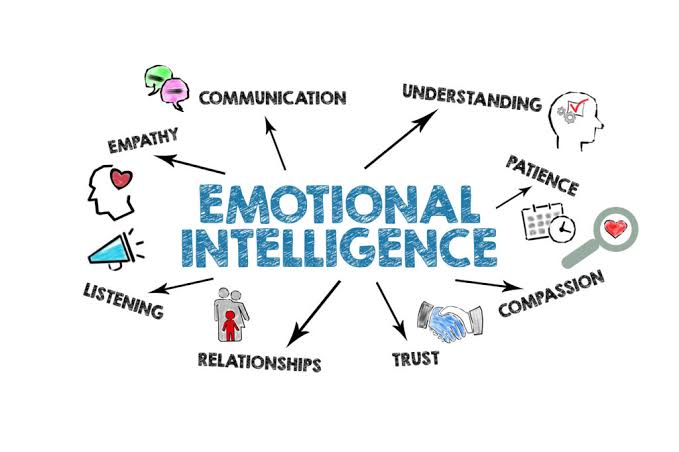
As a PR expert, these qualities are required of us during every activity and engagement with stakeholders. Most people are of the view that public relations is full of gimmicks, lies and schemes, that is why as a professional, we hold these qualities in high esteem to prove to the world that public relations field has evolved; it is credible and dependable. As a Public Relations person, one has to be seen as a trusted partner, one must be bold, yet persuasive, one must have consistency and have full appreciation of what is going on in the world. Emotional intelligence (EI) is a critical trait for a public relations (PR) professional as the job often involves managing relationships, understanding audience sentiments, and navigating complex interpersonal dynamics. Here's how emotional intelligence is essential for a PR professional: building relationships, effective communication, conflict resolution, leadership and team collaboration.
We cannot talk about personal competencies without talking about social competencies which is linked to social awareness. The social competencies have to do with empathy, sensing other’s feelings and perspectives, taking active interest in people, developing others; being selfless and willing to let others excel more than you, accepting others from diverse backgrounds, political awareness of others, reading power relationships. These qualities are a required currency for social relationships, peaceful cohabitation and collaboration.These qualities actually draw people to oneself, they feel comfortable around that person, and he /she becomes a confidant to his or her team members, colleagues or subordinates. One engages with people in a way that draws people to oneself (relationship management), the use of this understanding of emotions to relate better to other people and form healthier relationships. Have you met someone who is everyone’s go-to- person in the office, in the family etc? I’m sure you keep wondering why people run to this particular person for every issue, that is how social competence works.
Social competence is a quality that most leaders and team leaders must aspire to hone. In our part of the world, most superiors are not interested in developing others, most corporations do not even make provision in their budget for additional studies for their employees. We are of the view that when employees are trained or developed, they may eventually take away our positions or resign from the organisation that invested in them. Due to this, most colleagues do not disclose any initiative of self-development to the company in which they work. How many superiors or colleagues would allow other colleagues to excel more than them? Few I guess. Emotional Intelligence teaches us what the Bible admonishes us in Philippians 2:3 “In humility value others above yourselves”. When others are valued, there is no discrimination, no partiality, greed, selfishness nor toxic environment. Emotional Intelligence wields effective persuasion skills, and good communication skills. It enhances leadership to inspire, guide people and build bonds as well as nurture relationships.
In conclusion, emotional intelligence is a necessary skill for peaceful coexistence amongst people from diverse backgrounds. It also calls for mutual respect among leaders and associates, peers, colleagues, partners and stakeholders. Combination of high IQ and EI is a great asset for a professional or an individual. Therefore, it is important to combine both to achieve a successful social life and professional life in the world of today. As stated in Proverbs 11:1 “A false balance is an abomination to the Lord, but a just weight is his delight”. Emotional Intelligence is nurtured and honed to become part and parcel of an individual’s way of life. Its practice is intentional and strategic. So, the next time you find yourself in a space, try to be emotionally intelligent at all costs.
categories

Hello, I'm Prisca Patience
Ama Dziedzorm Gyamwodie officially known as Prisca Patience Gyamwodie, a Public Relations Expert/Strategic Communications by training, however, currently practicing International Relations and diplomacy by profession.
Recent comments
Leave a comment